


Recorders
Videoline makes three kinds of recorder: HD standalone DVRs for cameras on coaxial cable, network video recorders (NVRs) for IP cameras, and enterprise video storage for up to 512 IP cameras on one unit.
- 29 products
- 3 sub-categories
Sub-categories
All recorders
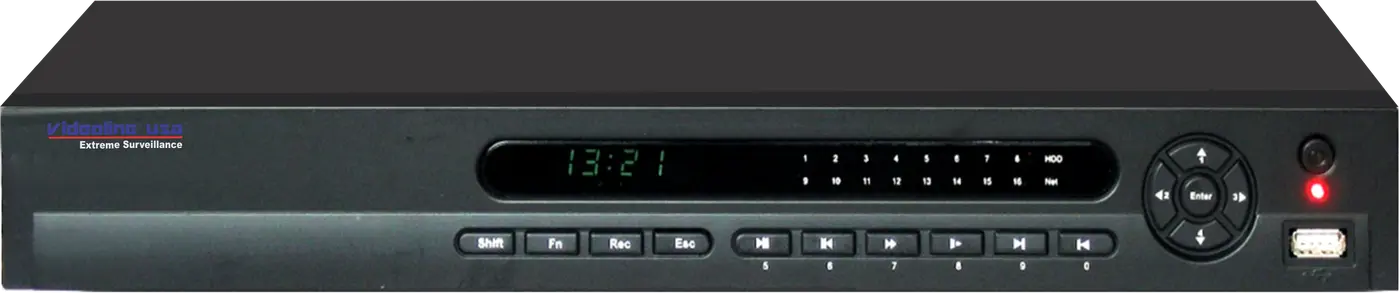
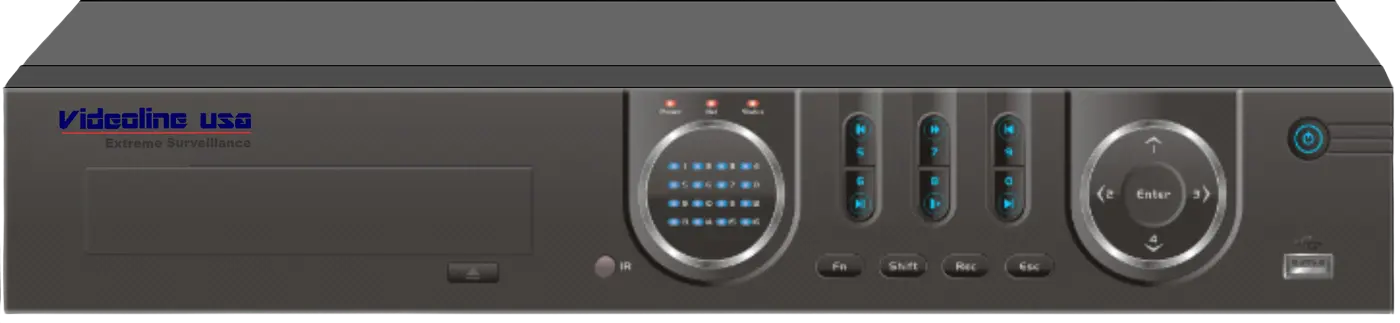
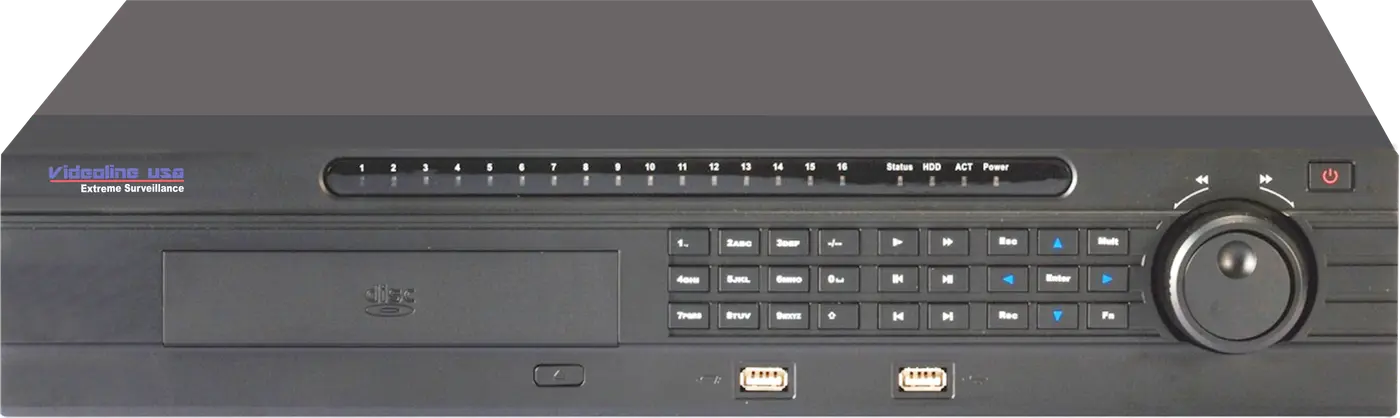
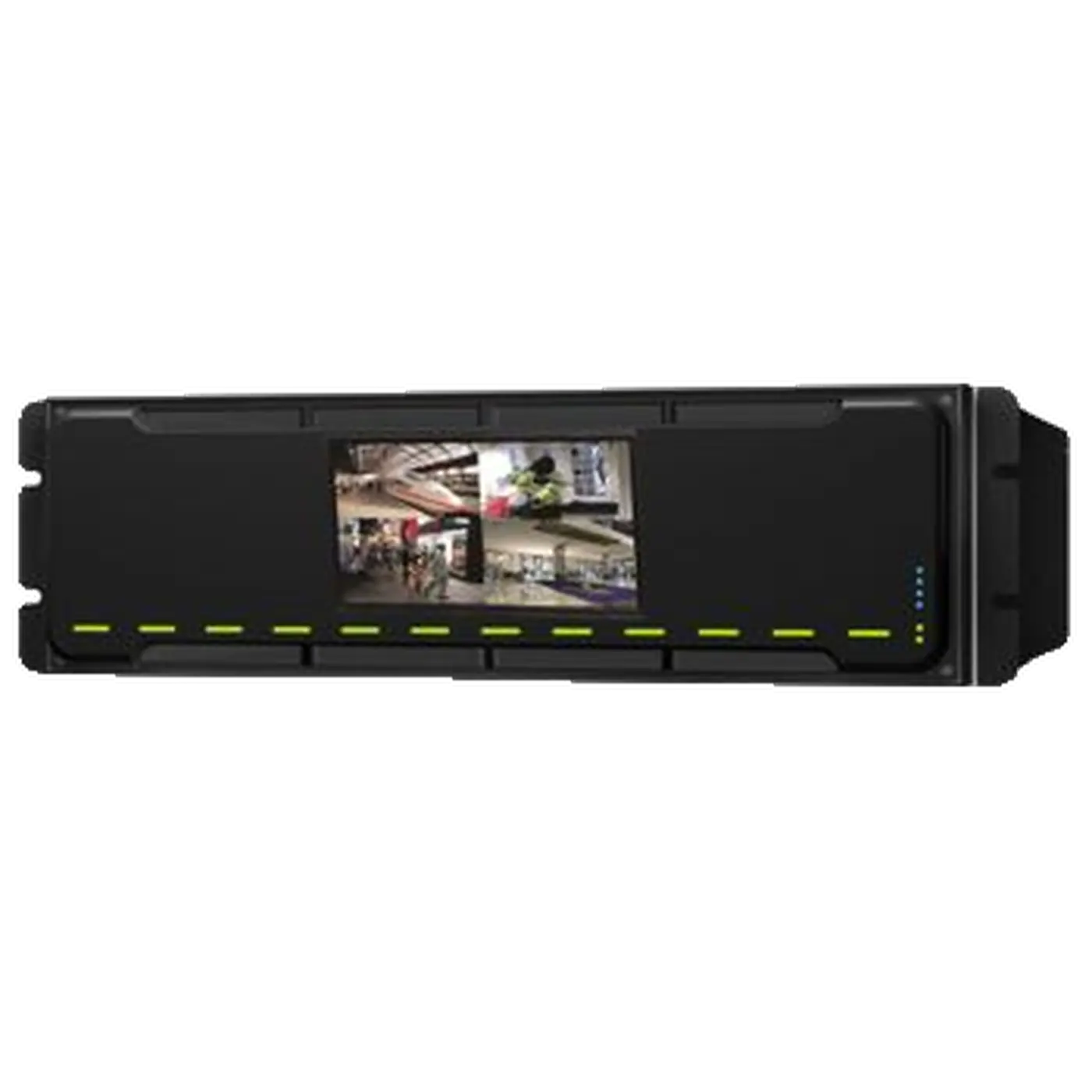
About Recorders
Choose a recorder by the cameras it records. An HD standalone DVR records cameras on coaxial cable, and Videoline's also take IP cameras, in 4, 8 and 16 channels. A network video recorder (NVR) records IP cameras, in 4 to 64 channels, and conforms to ONVIF, so it records other makers' cameras too. Enterprise video storage records up to 512 IP cameras on one unit, on RAID-protected hot-swap drives.
Questions about Recorders
What is the difference between a DVR and an NVR?
A DVR records cameras connected by coaxial cable, and an NVR records IP cameras over a computer network. In a DVR system the recorder digitizes and compresses each camera's signal; an IP camera compresses its own video before sending it. Videoline's DVRs are hybrids that record IP cameras as well.
How many channels does my recorder need?
A recorder needs one channel for each camera, so count the cameras you have and those you plan to add. Videoline's DVRs come in 4, 8 and 16 channels and its NVRs in 4 to 64; beyond 64 cameras, enterprise video storage records up to 512 IP cameras on one unit.
Can I watch my security cameras on my phone?
Yes: every Videoline DVR and NVR can be watched remotely on a phone through a mobile app, as well as in a web browser and on CMS (central management software) on a PC. The DVRs can also send an email or upload to an FTP server when an alarm is triggered.
How do I connect a DVR or NVR to a monitor?
Connect it by HDMI or VGA: every Videoline DVR and NVR has both, and they output at the same time. The VH2408-HCD, VH2416-HCD and VH2816-HCD DVRs and the 2U and 3U NVRs have two HDMI outputs. Videoline's CCTV monitors accept 4K and 1080P signals from a recorder.